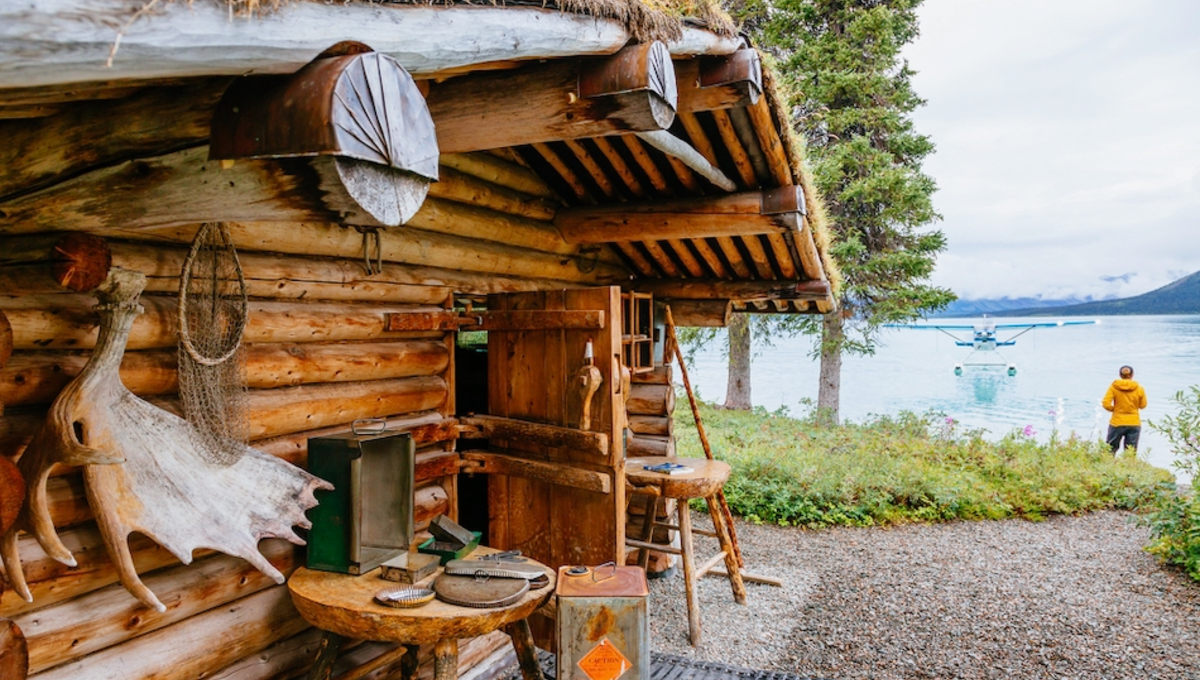
Every season our guides walk a small group of guests up the gentle rise from the shore of Upper Twin Lake to a hand-hewn spruce cabin tucked back against the spruce. It sits exactly where Dick Proenneke set the first log in the summer of 1968. The door still latches the way he carved it. The Dutch door still swings on hinges he made himself. Standing in front of that cabin is one of those moments where the Alaska our guests have read about and the Alaska in front of them suddenly become the same place.
Proenneke is the reason most of our guests have heard of Twin Lakes at all. The retired diesel mechanic from Iowa moved to this remote corner of what is now Lake Clark National Park intending to stay a year. He stayed thirty-one. He filmed his life there with a wind-up 16mm camera, kept meticulous journals, and left a record of one human paying close attention to one small piece of wild country for three decades. The cabin he built by hand has become a quiet pilgrimage site for people who recognize that kind of life as worth honoring. We have the deeper story of Proenneke’s biography, his cabin construction, and his philosophy on our Dick Proenneke page.
But here is what often gets lost in the Proenneke story: the man hiked. Constantly. Daily. The cabin gets all the attention, but Proenneke spent most of his waking life out on the land, climbing the ridges above Hope Creek, traversing the alpine benches behind Upper Twin, working his way up the drainages that feed the lake from the surrounding peaks. His journals read like a hiking log as much as a homesteading record. Ten miles. Fifteen miles. Up to a high pass to glass for sheep. Down a ridge to check on a goose nest. He knew this country the way most of us know our neighborhood streets, and he knew it because he walked it.
That is the part of his life our trips let our guests touch.
The country Proenneke walked
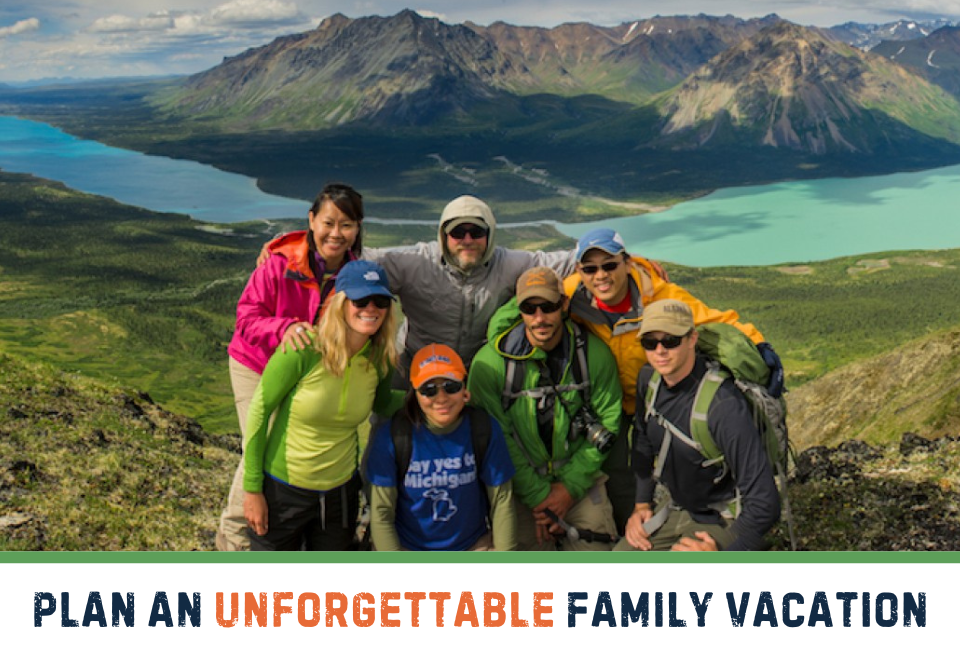
Twin Lakes sits in a bowl of mountains in the northwest corner of Lake Clark, ringed by peaks that rise four to six thousand feet straight off the lakeshore. The two lakes (Upper and Lower) string together for about twelve miles, separated by a short connecting stream. From the shore, ridges roll up through alder and spruce into open alpine within a few hundred vertical feet. The hiking starts at the water and never really ends.
Proenneke had favorite routes. The ridge directly behind his cabin (he called it “Falls Mountain” in his journals) gave him a long view down the length of both lakes. The country west toward the Volcanic Mountains gave him caribou and moose, and the mountains to the east gave him Dall sheep. The high passes that connect the Twin Lakes drainage to the Turquoise Lake drainage to the north were country he knew well enough that he could describe specific boulders and snowfields decades later from memory.
This is also the country our guides have been working since AAA’s earliest seasons. We have spent enough time on these ridges to know which alpine benches hold the wildflower bloom in late July, where the caribou tend to cross in early August, and which lake-level routes stay walkable when the cow parsnip gets shoulder-high. When we put a guest on a Twin Lakes ridge, we are not making it up as we go. We are walking ground we have walked many times before, much of it the same ground Proenneke walked.
Our three Lake Clark trips, three ways to walk this country
We run three guided trips out of the Twin Lakes and Turquoise Lake region of Lake Clark, each one tuned to a different idea of what it means to spend time in Proenneke’s country.
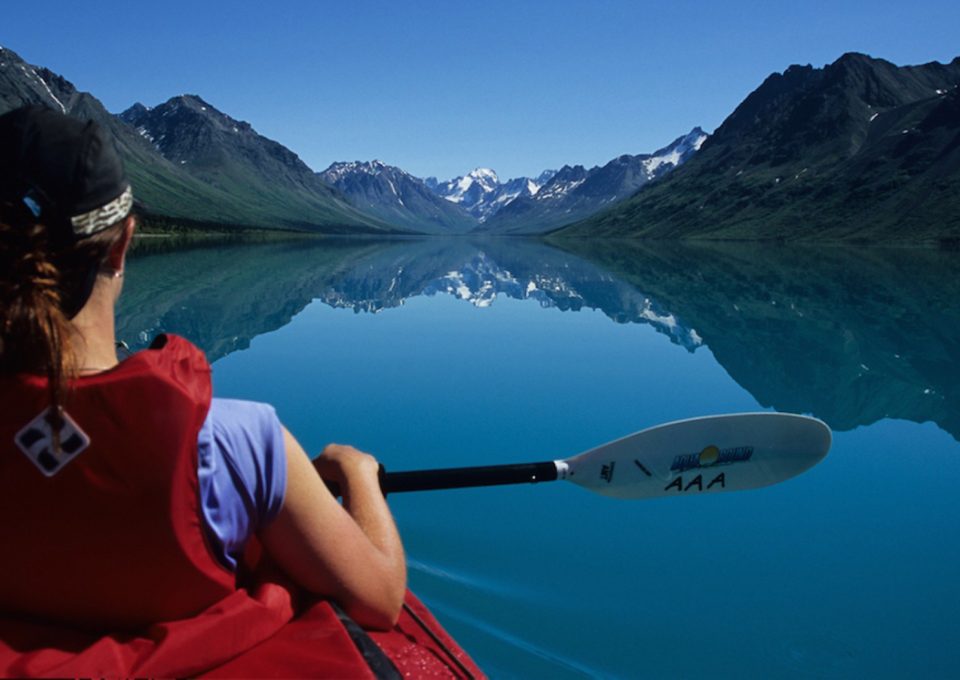
The Twin Lakes Paddle is the trip that visits the cabin itself. Five nights based at lakeside camps, with inflatable kayaks as our transport between hiking camps and day hikes that climb into the alpine above the lake. The visit to Proenneke’s cabin is a deliberate, unhurried morning. This is the trip for guests who want to stand inside the cabin, hike a couple of Proenneke’s favorite ridge routes, and spend their week soaking in the same shoreline he watched for thirty-one years.
The Turquoise to Twin Traverse is the trip that walks the country between Turquoise and lower Twin. Five full days, twenty-plus miles on foot, starting at Turquoise Lake on the far side of the divide and crossing high country to drop down into Twin Lakes from the north. This is the country Proenneke crossed in summer when he wanted longer trips. The traverse is moderate (Intensity Level 2) and family-friendly. The reward at the end is camping on the same shore as the cabin.
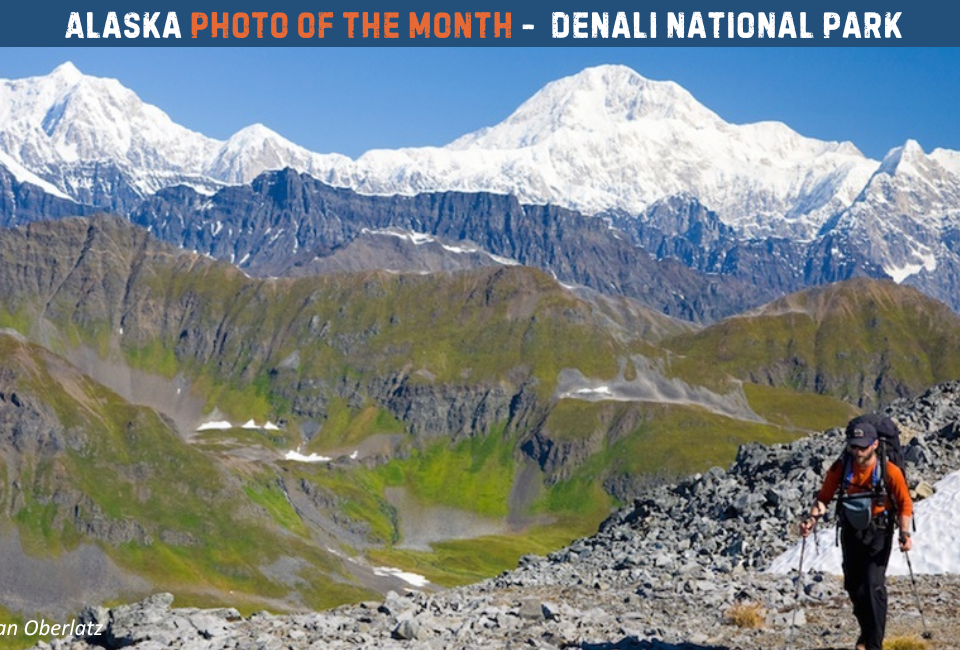
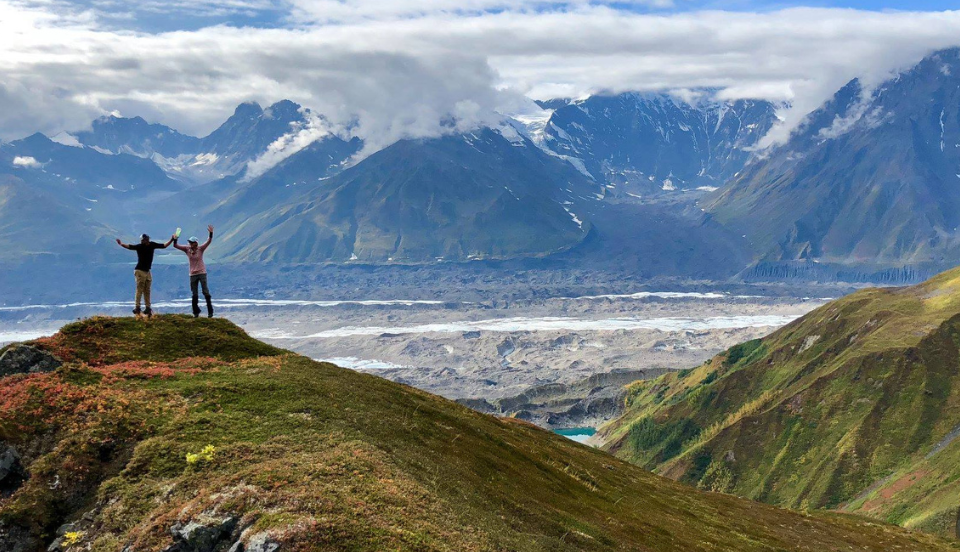
The Turquoise Glacier High Route is the trip that climbs higher than Proenneke usually went. Eight full days, fifty-plus miles, an Intensity Level 3 backpacking traverse Dan pioneered in 2006 that links Telaquana Lake to the glacier country above and then drops down into upper Twin Lake. This is alpine traversing, ridge walking, off-trail navigation. It is also some of the most spectacular sustained alpine hiking we run anywhere in Alaska. Proenneke would have loved this route, and it is highly likely that he walked into this same country and wrote about it in his journals.
All three trips end with a final night at the Lake Clark Resort, our partner lodge in Port Alsworth. After a week or more on the trail, a real bed, a hot shower, and a proper dinner is the right way to close out the experience before flying back to Anchorage.
What the cabin teaches
Visitors who come away from a cabin visit changed are usually changed by one specific thing: the slowness. Proenneke didn’t rush. He shaped logs over weeks, not days. He carved spoons by lamplight in the evenings because spoons were what was needed and he had time. He spent thirty-one years in a place small enough to walk across in a long day, and he never seemed to get bored of it.
That is a counter-message to almost everything modern travel is built around. Most travel sells velocity (more places, more bullet points). Lake Clark sells the opposite. The country rewards staying still long enough to notice that the light on the lake changes hour by hour, that the wind shifts from the mountain passes at noon, that the sheep come down to the shore to lick salt at certain times of certain mornings. Proenneke set the example. Our trips give guests the structure (camps, meals, route plans) and then get out of the way so the country can do the rest.
We also take seriously what Proenneke’s example asks of us as a guiding operation. We are guests in country he treated with care, in a national park established in part because of his support. We pack out what we pack in. We camp in places that don’t trace. We move quietly. Our low-impact practices on Lake Clark trips are not corporate sustainability theater. They are the bare minimum any visitor owes this place, and our guides have been working to that standard for nearly three decades.
Visit Twin Lakes with us
If standing on the porch of Proenneke’s cabin and looking out over the same water he watched for thirty-one years sounds like the kind of moment worth flying to Alaska for, we can put you there. Our Lake Clark trips run from June through early September. Group sizes stay small. Most years sell out by spring.
Reach out and we will help you choose the right one.