
Our Food Program
Scratch-cooked menus, prepared in our Anchorage kitchen, finished hot in camp.
Food is one of the most important things we get right on every trip we run. Over a season our team prepares roughly 9,000 meals for guests, served from camps that are routinely 150 miles or more from the nearest paved road. That logistical reality shapes everything about how our backcountry food program works.
We cook from scratch in our own commercial kitchen in Anchorage. Real ingredients, dehydrated or vacuum-packed where it makes sense, and finished hot in camp by your guides. No off-the-shelf freeze-dried packets, no mystery meals. Just food recipe-tested over two decades and refined every season based on what guests actually want to eat after a long day in the wilderness.
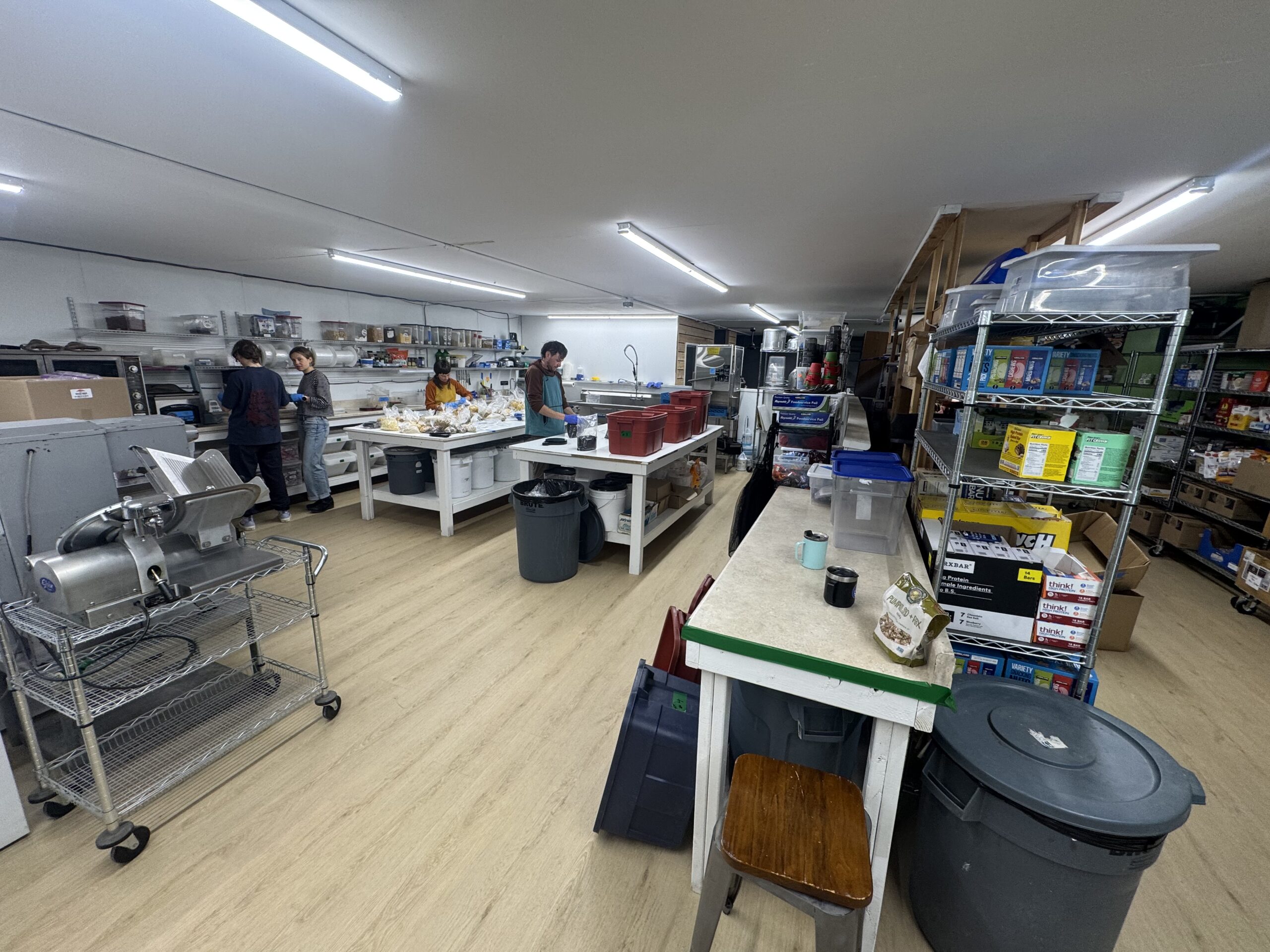
The depth behind our menu
Our food program is chef-created and chef-inspired, refined over more than two decades of running expeditions in some of Alaska’s most remote country. The depth of that program is what led us to spin off a sister company in 2011 called Adventure Appetites, which carried our recipes into a wider commercial market and earned a Backpacker Magazine Editor’s Choice Award along the way. We wound Adventure Appetites down in 2021 to refocus on our own trips. The kitchen, the recipes, the supplier relationships, and the people who built that program are all still here.
The same kitchen has supported expeditions well beyond our regular guided trips. We have menu-planned and outfitted 30-day ski film projects for Teton Gravity Research and Matchstick Productions, multiple Denali climbing expeditions, and Cody Townsend’s Mt. St. Elias expedition as part of his Fifty Project. Projects like those put more demand on a food program than almost anything else: weeks in the field, high caloric output, no resupply, and athletes who need to perform. That work runs out of the same kitchen, with the same recipes, that feeds our guided guests.
What’s on the menu
A typical dinner in camp might be Panang Curry Beef over jasmine rice, Reindeer Rotini with a tomato-herb sauce, Beef Stroganoff on wide noodles, or Chicken Satay with a peanut-ginger sauce. Mornings start with Reindeer Gouda Scramble, Sleeping Bag Hashbrown Skillet, Cherry Apple Orzo, Chilaquiles, or steel-cut oats.
Desserts are our own recipes, baked in Anchorage and packed in: Mountain Cookies, Coffee Toffee Brownies, Brooks Bars, Babe Ruth Bars, Butterfinger Bars. Hot coffee, Starbucks Via, a range of teas, bulk hot cocoa, Crystal Light, and electrolyte mixes are brought on all trips.
In addition to set meals, every guest gets a generous daily snack supply from the group larder: GORP, premium mixed nuts, energy bars, hunter sticks, Babybel cheese, mini candy bars. Trust us, you will eat well and will not run out of food!
See a sample 7-day backcountry menu (PDF)
Backpacking trips and snack-pack lunches
On backpacking-specific itineraries, midday lunches are deliberately light to keep pack weight down. Most days you will eat snack-pack style, grazing through 1,200 to 1,500 calories of energy bars, chocolate, hunter sausage, and cheese during short breaks rather than stopping for one long sit-down meal. We break that rhythm with a couple of full backcountry lunches mid-trip, plus a substantial sack lunch on fly-out day from our partner lodge in Port Alsworth. See our backpacking trips for the full activity overview.
Lodge and hotel nights
Most of our trips include at least one night at a hotel or lodge with dining included or restaurants nearby. Pre-trip orientations in Anchorage and Fairbanks both include dinner and breakfast at our partner hotels. Our Lake Clark trips and our Katmai trips via Lake Clark include a night at the Lake Clark Resort with accommodations and meals. These properties can accommodate most dietary needs with advance notice, which is why we ask you to flag restrictions early.
Dietary restrictions and allergies
Two ground rules first, because they shape everything else.
Guides cook for the group, not the individual. Our guides are preparing meals for up to ten people at a time, on a tight fuel budget, in bear country. Meal-by-meal swaps and ingredient substitutions are not possible in the field. What we plan and pack from Anchorage is what gets cooked.
Guests do not operate stoves. Personal stoves are not permitted on our trips. Stove use in the backcountry is a fire-safety, fuel-handling, and bear-attractant issue, and managing it is a guide responsibility. This sits inside the broader personal-responsibility framework we describe in our Safety & Responsibility code. The universal accommodation, regardless of diet, is hot water. Your guide will keep hot water available at meals so you can rehydrate any pouch meals you bring along, alongside the group.
With those rules in place, we make a clear distinction between medically necessary diets and preferential diets, and we handle them differently.
Medically necessary diets cover celiac disease, life-threatening food allergies, and medical conditions that require specific dietary protocols. We treat them as safety issues, not menu preferences. Tell us early, in detail, and we will work with you to confirm exactly what we can and cannot serve.
All gluten-free requests are handled as celiac protocol. There is no “gluten-light” track here. The risk of a backcountry food-related illness, far from medical care, is not one we are willing to take. If you are gluten-sensitive without celiac, you are welcome to opt into the GF protocol, but expect that protocol, not a relaxed version of it.
Preferential diets cover vegetarian, vegan, dairy-free (non-medical), low-FODMAP, ketogenic, paleo, and similar. These we accommodate within the structure of our fixed menus. Vegetarian is straightforward and adds no friction for you or your guides. Vegan is supported with Good To-Go pouch meals for breakfast and dinner, with guest-supplied snacks for lunches (1,200 to 1,500 calories of your favorite vegan snacks and bars). The vegan track has less variety than the standard menu by definition. We would rather tell you that up front than have you discover it on day three.
For diets that combine multiple restrictions or get more complex than our fixed kitchen can serve, we may ask you to provide some or all of your own meals. We would rather be honest about that up front than have you discover in the backcountry that the food we packed for you is not enjoyable. Buy and try unfamiliar dehydrated meals at home first.
Dietary tracks at a glance
| Track | Breakfast | Lunch | Dinner | Guest brings? |
|---|---|---|---|---|
| Standard | AAA menu | AAA snack pack (1,200-1,500 cal on backpacking) | AAA menu | No |
| Vegetarian | Same as group | Same as group | Same as group, with a meat substitute | No |
| Vegan | Good To-Go vegan + hot water | Guest-supplied snacks | Good To-Go vegan + hot water | Yes. 1,200-1,500 cal vegan snacks/bars |
| Gluten-free | Bagged GF granola (most days); some group meals work | Guest-supplied snacks | Good To-Go GF dehydrated meals | Yes. 1,200-1,500 cal GF snacks/bars |
When to tell us
The earlier the better. Note any restrictions on your guest information form at booking. Our office will follow up with you, hunt down ingredient lists where needed, and confirm what we can serve. Your guide will also confirm dietary needs on the pre-trip client call before orientation. There is no such thing as too much advance notice.
Frequently asked questions
Yes. We serve Good To-Go vegan dehydrated meals for breakfast and dinner from our preferred vendor, plus hot water at every meal. For lunches we ask vegan guests to bring 1,200 to 1,500 calories of their preferred vegan snacks and bars, the same caloric range as our standard snack-pack lunches. Note in advance and we will plan around it.
Yes, and we handle every gluten-free request as celiac protocol. There is no “gluten-light” option on our trips. We provide Good To-Go gluten-free dehydrated meals for dinner, individually bagged GF granola for most breakfasts, and a couple of group breakfasts that work for GF eaters. For lunches, gluten-free guests bring 1,200 to 1,500 calories of their preferred GF snacks and bars, the same caloric range as our standard snack-pack lunches. The risk of a backcountry food-related illness, far from medical care, is not one we are willing to take.
Carefully and seriously. Most of our house-made desserts contain peanuts or are produced on equipment that handles peanuts, and we assume cross-contamination throughout our kitchen. Tell us at booking, not in the field.
We will work with you, and we will be honest with you. If your combination of restrictions exceeds what our fixed-menu kitchen can serve, we may ask you to provide some or all of your own meals. We would rather set that expectation early than have you arrive disappointed.
You can bring shelf-stable supplemental food and dehydrated pouch meals, and your guide will keep hot water running at meals so you can rehydrate them. You cannot bring or use a stove. Personal stoves are not permitted on our trips for fire-safety, fuel-handling, and bear-attractant reasons, and your guides cannot prepare a separate meal or substitute ingredients on the fly while cooking for up to ten people. If your dietary needs require a different approach, talk to us before you book so we can plan together.
Yes. All in-field meals are included on every trip, plus pre-trip orientation dinner and breakfast at our partner hotel, and any included lodge meals as part of the itinerary. The only meals not included are restaurant meals on your own time in Anchorage before or after the trip.
Your guides finish meals in camp, often by rehydrating components prepared in our Anchorage kitchen and adding fresh elements. Hot water and stove time are guide-managed for safety reasons.
Talk to us
Questions about how a specific diet works on a specific trip? That is exactly what our office is for. Call us at 907-351-4193, email info@alaskaalpineadventures.com, or shop our trips and we will walk through it with you.